
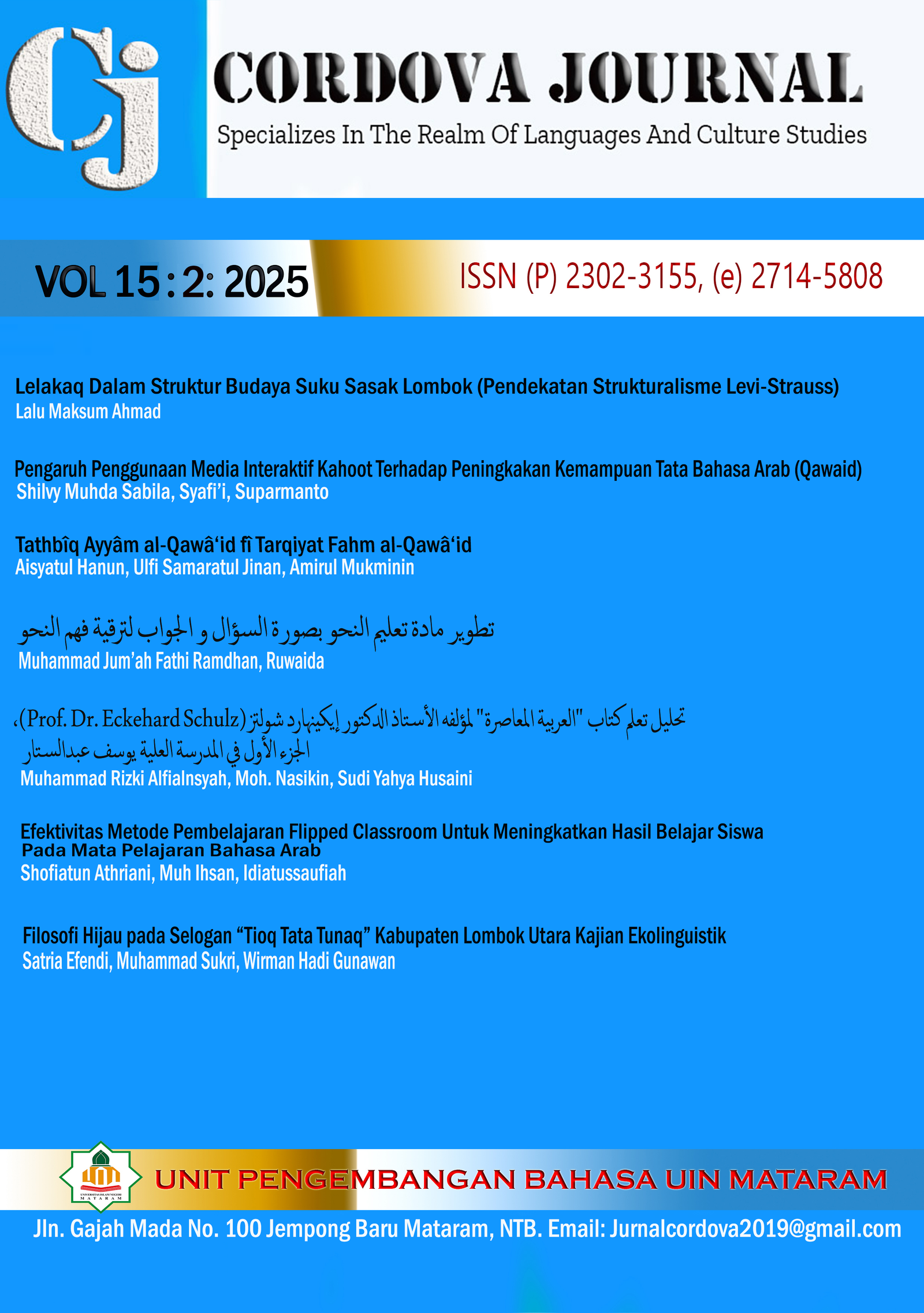
The Effectiveness Of The Flipped Classroom Learning Method In Improving Students’ Learning Outcomes In Arabic Language Subjects
DOI:
https://doi.org/10.20414/cordova.v15i2.14529Abstract
This study aims to determine the effectiveness of applying the Mastery Flipped Classroom learning method on students’ Arabic learning outcomes in the eleventh grade at MAS Mu’allimin NW Pancor. The Mastery Flipped Classroom method reverses the traditional learning pattern by providing materials through videos or learning resources before face-to-face sessions, allowing students to learn at their own pace and level of understanding (self-paced learning). During classroom sessions, the teacher acts as a facilitator who guides students through comprehension and enrichment activities until they reach a certain level of mastery.This research employed a quantitative approach with a True Experimental design. The research design was used a control group design involving two groups: the experimental class and the control class. Data were collected through learning achievement tests and interviews. Data analysis included normality tests, linearity tests, and t-tests using SPSS Statistics version 25. Based on the results of data analysis, the experimental class obtained an average pre-test score of 69.03 and an average post-test score of 78.2, while the control class obtained an average pre-test score of 72.5 and an average post-test score of 77.6. Furthermore, the hypothesis test showed that tcount < ttable (0.229 < 2.009), indicating that H₀ was accepted and Ha was rejected. Therefore, it can be concluded that there is no significant effect of the Mastery Flipped Classroom method on students’ Arabic learning outcomes. The results showed an increase in the average score in the experimental class after applying the flipped classroom method; however, the improvement was not statistically significant. Thus, this method has not been proven to be more effective than conventional learning. Factors that may have influenced these results include the limited sample size, differences in students’ initial abilities, and the short duration of implementation. Moreover, some students did not fully engage in independent learning activities before class, reducing the effectiveness of the method. Nevertheless, the flipped classroom approach still had a positive impact on students’ understanding of the learning material.
Downloads
References
Abdullah, K., & Jannah, M. (2021). Metodologi Penelitian Kuantitatif. Aceh: Yayasan Penerbit Muhammad Zaini.
Andriani. A. (2015). Urgensi Pembelajaran Bahasa Arab dalam Pendidikan Islam. Ta'allum 3, 43-44.
Halik, A. (2012). Metode Pembelajaran : Perspektif Pendidikan Islam. Jurna al- Ibrah, 1, 45-47.
Hidayat. (2020). Metode Pembelajaran Bahasa Arab Berbasis Multiple Intelegences dalam Meningkatkan Minat dan Prestasi Belajar Siswa Kelas X MAN 3 Klaten Tahun Ajaran 2019/2020. Phd Thesis, Universitas Sunan Kalijaga.
Hosaini, Kurniawati, Y., Fitrina, Y., Rahayu, E. P., Suarnatha, I. d., Haqiyah, A., et al. (2022). Metode an Model Pembelajaran untuk Merdeka Belajar. Jawa Timur: CV Kreator Cerdas Indonesia.
Kamsinah. (2008). Metode Dalam Proses Pembelajaran: Studi tentang Ragam dan Implementasinya. Lentera Pendidikan, 11, 106- 107.
Kristianada, V., & Halim, W. (2022). Perbandingan Strategi Pengajaran Flipped Classroom dan Konvensional pada mata kuliah teoritis dan hitungan saat pembelajaran jarak jauh. Sentekmi, 1, 338.
Maryanto. (2013). Pembelajaran Bahasa Arab di MAN Karangayar (Studi Deskriptif Kualitatif Pada Kelas X Tahun Pelajaran 2012/2013. Naskah Pubikasi, Universitas Muhammadiyah Surakarta, Surakarta.
Nurfalah. F. (2022). Evektivitas Model Pembelajaran Flipped Classroom Materi Pemanasan Global terhadap Prestasi Belajar Kognitif Siswa Kelas XI di SMAN 3 Cikampek. Pdh Thesis, Universitas Islam Negeri Walisongo.
Patandean, Y. R., & Indrajit, R. E. (2021). Flipped Classroom. Yogyakarta: ANDI.
Pratidiana, D., Pujiastuti, H., & Sentosa, C. A. (2022). Penerapan Model Pembelajaran Flipped Classroom untukk Meningkatkan Kemampuan Pemecahan Masalah Matematis Siswa. PhD Thesis, Universitas Sultan Agung Tirtayasa.
Rahmayani. A. (2020). Pengaruh Model Pembelajaran Flipped Classroom terhadap Hasil Belajar Kognitif Siswa SMA Pada konsep Gerak Sepakbola. Phd Thesis, Universitas Islam Negeri Syarif Hidayatullah.
Rohman A. H. (2021) “Analisis Metode Pembelajaran Bahasa Arab kelas 2 Ula Madrasah Diniyah Al- Amiriyyah Blokagung Karangdoro Tegal sari Bayuwangi Tahun Pembelajaran 2020/2021” Pdh Thesis, Institut Agama Islam Darussalam.
Sonia, N. R. (2022). Model Flipped Classroom: Alternatif Pembelajaran di Era New Normal Bagi Siswa Sekolah Dasar. Jurnal IBRIEZ, 7, 27.
Sugiyono. (2022). Metode Penelitian Kuantitatif. Bandung: Alfabeta.
Sulastri, Imran, Firmansyah. A. Meningkatkan Hasil Belajar Siswa Melalui Strategi Pembelajaran Berbasis Masalah Pada Mata Pelajaran IPS Kelas V SDN 2 Limbo Makmur Kecamatan Bumi Raya. Jurnal Kreatif Tadulako Online, 3, hlm. 92
Syafi'i, A., & Rodiyah, S. K. (2018). Studi Tentang Prestasi Belajar Siswa Dalam Berbagai Aspek dan Faktor yang Mempengaruhi. Jurnal Komunikasi, 2, 117-118.
Widiyanto, M. A. (2023). Statistika Terapan. Jakarta: PT.Elex Komputindo.
Additional Files
Published
Issue
Section
License
Copyright (c) 2025 Shofiatun Athriani, Muhammad Ihsan, Idiatussaufiah

This work is licensed under a Creative Commons Attribution-NonCommercial-ShareAlike 4.0 International License.

is licensed under a Creative Commons Attribution-ShareAlike 4.0 International License


